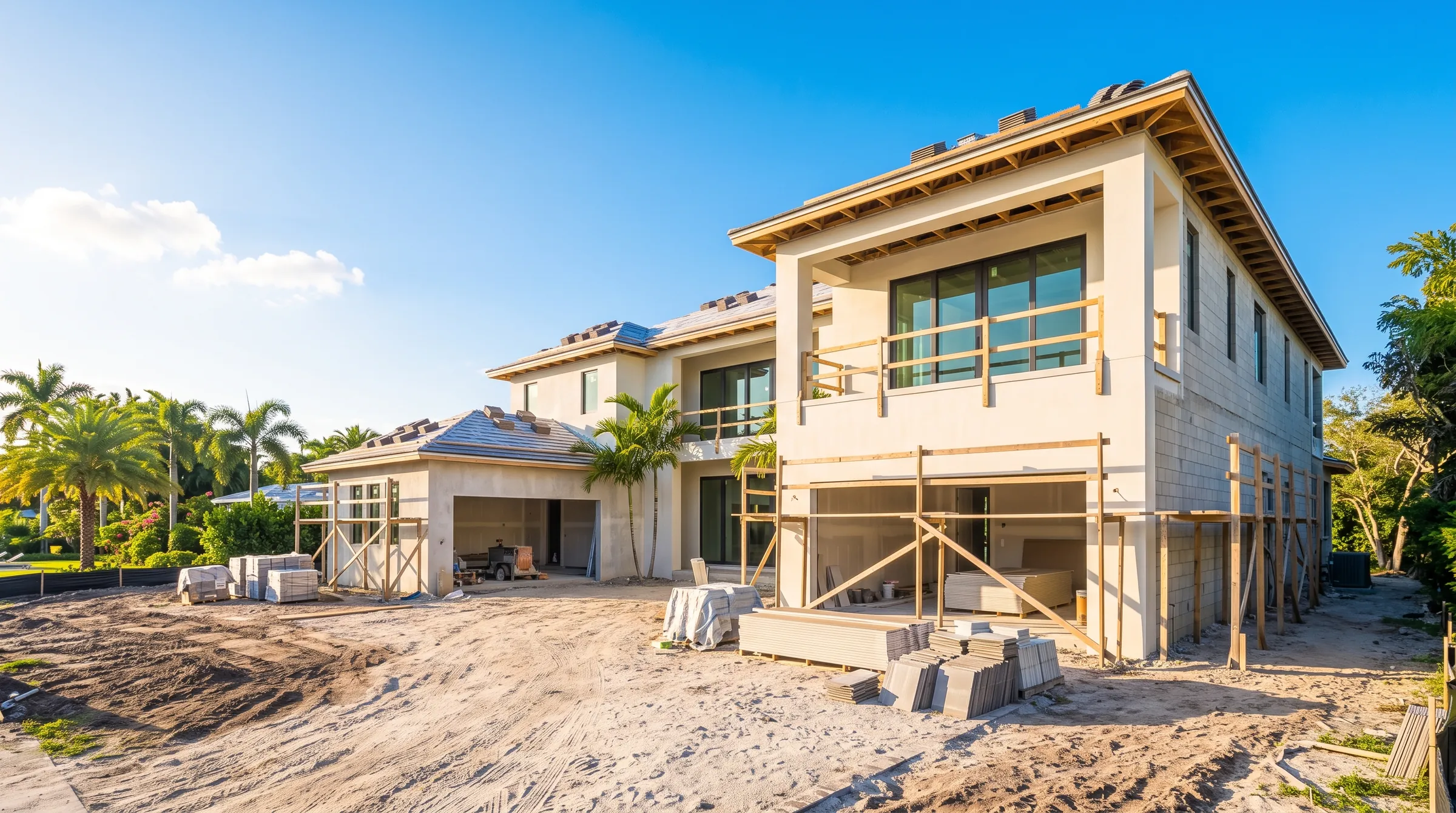
Build your home with one loan and one closing
A one-time close construction loan covers the build and your permanent mortgage with a single closing. We compare conventional, FHA and VA construction programs from the lenders that offer them.
- Google rating4.9209 reviews
- Lenders compared100+on every loan
- Credit check1soft pull available
- BBB ratingA+Better Business Bureau
- Licensed inFL · GA · COFLNMLS #1781090
- Bilingual teamEN/ESEnglish & Español
Overview
A one-time close construction loan, also called construction-to-permanent financing, combines the construction loan and your permanent mortgage into a single loan. You qualify once, close once and pay one set of closing costs, instead of closing a short-term construction loan and then refinancing into a mortgage when the house is finished. The loan can include the purchase of the lot, or you can build on a lot you already own.
Lenders usually require a licensed, insured builder they approve, along with plans, specifications, a signed construction contract and a detailed budget. The appraisal values the home as it will be once complete. During the build, funds are released in draws as each stage of work is inspected. Depending on the lender, you may make interest-only or reduced payments while construction is underway. When the home is finished, the loan converts to your permanent mortgage.
One-time close programs come in conventional, FHA and VA versions, but not every lender offers each one, and builder approval rules, lot requirements and contingency reserves differ. If you already own your lot, its equity may count toward your down payment, depending on the lender. QMS compares construction programs across lenders and coordinates with your builder through the draws. All loans are subject to credit approval and lender guidelines.
Is it a good fit?
- Want to build a new primary home rather than buy an existing one
- Already own a lot or have one under contract
- Have a licensed builder, or are ready to choose one
- Prefer one closing and one set of closing costs
- Are an eligible veteran or want FHA flexibility for a new build
- Want your permanent mortgage arranged before construction starts
What you'll need
- Pay stubs covering the most recent 30 days and recent W-2 forms
- Bank statements for the past two months
- Signed construction contract and detailed budget from your builder
- Plans and specifications for the home
- Builder's license and proof of insurance
- Lot purchase contract, or the deed if you already own the lot
- Certificate of Eligibility, for a VA construction loan
How it works
How it works with QMS
Plan the build
We review your income, credit, lot and builder to confirm which construction program fits.
Approve builder and plans
We match you with a lender, then submit your builder, plans and budget for review and appraisal.
Close once and build
You close one time, draws are released as work is inspected, and the loan converts when the home is done.
FAQ
One-Time Close Construction loan FAQs
Don't see yours? Call us or send a message. We answer the same business day.
305-425-1990How is a one-time close loan different from a two-time close?
With a two-time close, you take out a short-term construction loan, then close again on a separate mortgage when the house is finished, paying two sets of closing costs and qualifying a second time. A one-time close combines both into one loan with one closing. That can reduce costs and the risk that a change in your finances affects the permanent loan.
Can I build on land I already own?
Yes. Many lenders allow you to build on a lot you already own, and some let the equity in that lot count toward your down payment. If you are still buying the lot, the purchase can often be included in the same loan. Lenders review the lot's title, zoning and access to utilities, and requirements differ by program.
Can I build a home with an FHA or VA loan?
Yes, through lenders that offer FHA or VA one-time close construction programs. These follow the same basic rules as FHA and VA purchase loans, so the home must be your primary residence, and VA borrowers need a Certificate of Eligibility. Fewer lenders offer these versions and builder requirements can be stricter, so comparing lenders matters here.
What happens if construction runs over budget or takes longer?
Many lenders build a contingency reserve into the budget to absorb some cost overruns, and changes to the plans usually need lender approval. If construction runs past the lender's allowed period, an extension may be available, sometimes for a fee. Choosing an experienced builder with a realistic schedule helps. We review these terms with you before you close.
Get started
Know your numbers before you make an offer.
Tell us about your scenario and we'll price it across our lenders the same business day.