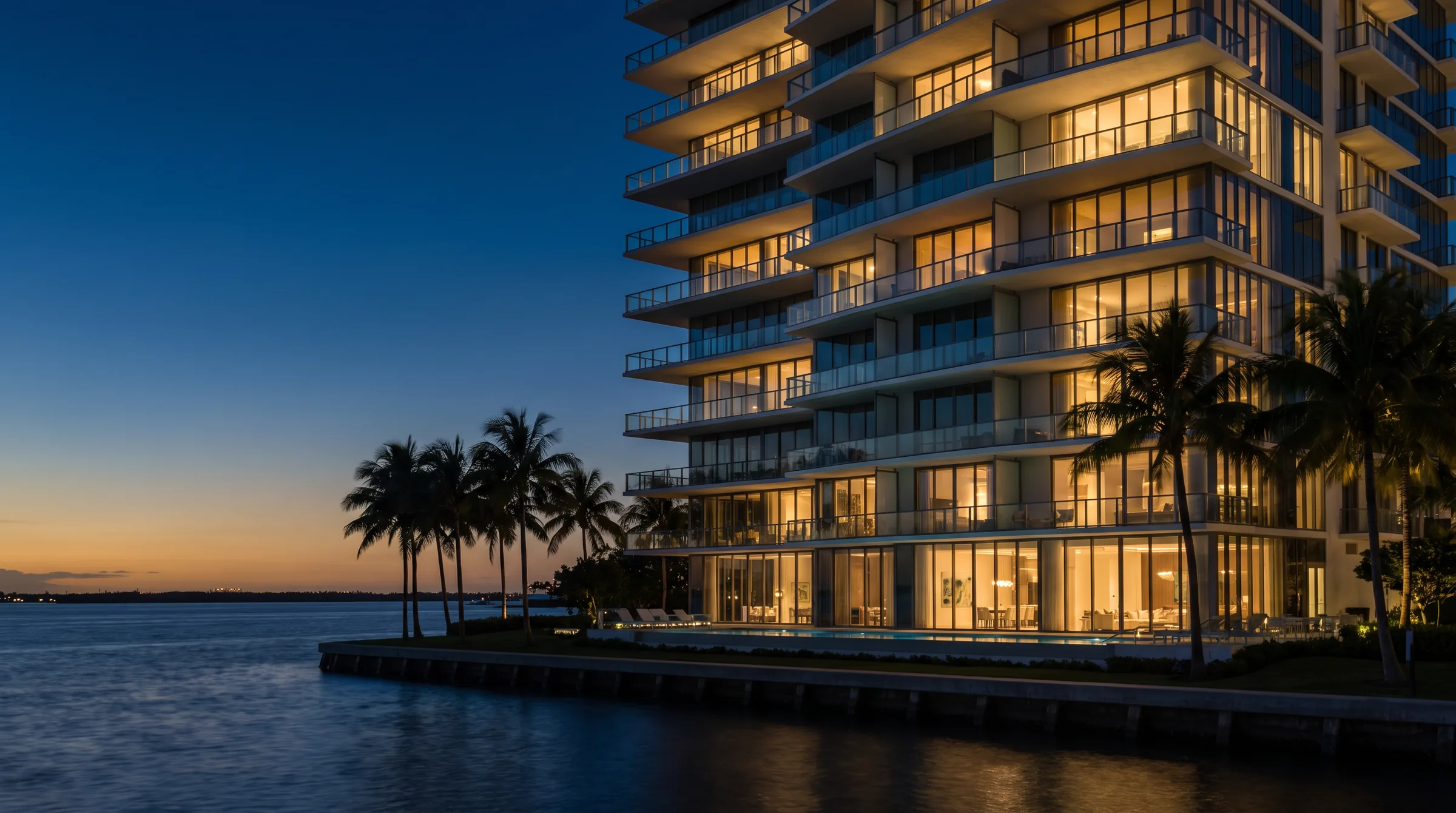
Lenders judge the building as much as they judge you. Run these five checks before you make an offer, refinance or pull cash out of a South Florida condo. Or send us the building name and we'll tell you which loans fit.
What lenders look at, why it matters and where to check it yourself.
1
Warrantable or not
A building that meets Fannie Mae and Freddie Mac rules is 'warrantable' and can use regular conventional loans. If not, you need a non-warrantable condo loan.
How to check: Lenders review the budget, insurance, lawsuits, how many units one owner holds and how much space is commercial.
Reserves pay for big repairs. Low reserves mean special assessments later, so lenders test them.
How to check: Ask for the current budget. For conventional loans the reserve line must be at least 10% of the budget, rising to 15% for applications on or after January 4, 2027.
The building needs a master policy with deductibles inside the limits, and you need your own unit policy (HO-6).
How to check: Ask for the master policy declarations page. Master deductible: $50,000 per unit at most. HO-6 deductible: up to the greater of 5% or $2,500.
Condo financing changes in plain English, with the official source for each one. New items every week.
Coming Jan 4, 2027
Condo reserves must reach 15% of the budget for most conventional loans
For conventional loan applications dated on or after January 4, 2027, a condo association must put at least 15% of its annual budget into reserves, up from 10%. Fannie Mae and Freddie Mac both set this date.
What it means for you: If your building budgets less than 15% for reserves, conventional financing may not be available there in 2027. Buyers and owners who want to refinance can still use a non-warrantable condo loan. Ask the association for the current budget before you make an offer.
More details
A building that misses the 15% test can still qualify with a reserve study that is no more than three years old, prepared by an independent professional, if the budget funds the study's highest recommended amount. The 'baseline funding' method is no longer accepted (since August 3, 2026). Special assessments or association loans do not replace the budget requirement.
Florida's structural reserve study (SIRS) filings are public
Florida condo associations had to finish a Structural Integrity Reserve Study by December 31, 2025 and report it to the state within 45 days of completion. The state publishes the completed filings in a public database.
What it means for you: Before you buy, look up the building. A missing or late SIRS is a common reason a lender asks more questions or declines a building, and the study often explains why a special assessment is coming.
More details
Only complete filings appear in the database, and new filings show up within one business day. Milestone inspections are a separate requirement for buildings three stories or taller; ask the association for the latest report.
Every conventional condo loan now gets a full building review
Fannie Mae retired its Limited Review and Freddie Mac retired its Streamlined Review for applications on or after August 3, 2026. Lenders now check the budget, insurance, litigation and ownership of almost every building.
What it means for you: Plan for a longer condo questionnaire and a few extra days. Small buildings with 10 units or fewer may qualify for a waiver, and new attached condos in Florida no longer have to go through Fannie Mae's separate project review (PERS).
More details
Fannie Mae also retired the 50% investor-concentration limit for established buildings under a full review, which helps investors buying a rental condo with a conventional loan.
For conventional loans, the building's master policy can't have a deductible above $50,000 per unit (applications on or after July 1, 2026). Your own unit policy (HO-6) deductible can be up to the greater of 5% of coverage or $2,500.
What it means for you: Ask the association for the master policy declarations page early. A deductible above the limit is a fixable problem, but it can delay a closing.
Many South Florida owners are getting large assessments for repairs and reserves. You may be able to pay it from your home's equity instead of savings.
Our quarterly report tracks the rules and numbers behind condo financing in Miami-Dade, Broward and Palm Beach. Reporters and agents are welcome to cite it with a link.
Ask the association for its budget, master insurance policy and a completed condo questionnaire, then have a lender review them. The main tests are reserves, insurance, lawsuits, how many units one person owns and how much of the building is commercial. We can review a building for you before you make an offer.
Can I get a mortgage on a non-warrantable condo?
Yes. Non-warrantable condo loans are made for buildings that miss one or more Fannie Mae or Freddie Mac rules. They usually need a larger down payment than a conventional loan, and the terms depend on the building and on you.
What changes for condo loans on January 4, 2027?
For most conventional loans, the condo association must budget at least 15% of its annual income for reserves, up from 10%, or support a lower number with a qualifying reserve study.
Where can I see if my building filed its SIRS?
Florida's Department of Business and Professional Regulation publishes completed Structural Integrity Reserve Study filings in a public database on its SIRS reporting page.
Can I use a HELOC to pay a condo special assessment?
Often, yes, if you have enough equity and the building is financeable. A HELOC lets you draw only what you need. A cash-out refinance is another option when it makes sense to replace your first mortgage.
Get started
Know your numbers before you make an offer.
Get a quote in minutes, or call and talk with a licensed loan officer today.